

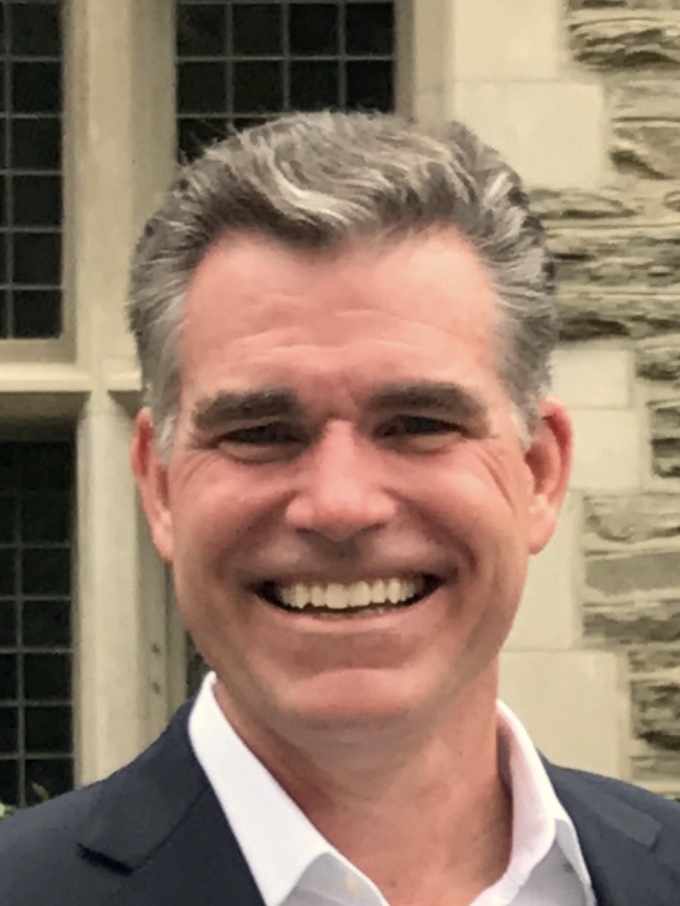
David Meaney
Vice Provost for Research
University of Pennsylvania
Dr. David Meaney is Vice Provost for Research at the University of Pennsylvania, responsible for the policies, infrastructure, and strategic initiatives that advance Penn's research enterprise across medicine, engineering, the natural sciences, and the social sciences. In this role, Dr. Meaney is currently leading three interconnected priorities: the buildout of Penn's artificial intelligence research infrastructure through the Penn Intelligence Initiative; the launch of PARCC, Penn's new advanced research computing center and one of the fastest academic supercomputing clusters in the United States; and the continued development of Penn's technology transfer ecosystem in partnership with the Penn Center for Innovation. Together these efforts are designed to accelerate discovery, expand Penn's national research competitiveness, and ensure that Penn-generated knowledge reaches the public through commercial and policy channels. Dr. Meaney's own research is focused on the mechanisms and treatment of mild traumatic brain injury. His group's contributions include experimental data that informed revisions to federal motor vehicle safety standards for head protection, the identification of mechanical force sensors in neurons that drive circuit rewiring after concussion, and some of the earliest clinical imaging studies to detect brain injury after concussive impact. His current work centers on blood-based biomarkers for concussion diagnosis and recovery monitoring, and on therapeutic strategies to enhance neural repair after traumatic brain injury. He is the author of more than 180 archival publications and an elected fellow of both AIMBE and BMES. Dr. Meaney received his B.S.E. in Biomedical Engineering from Rensselaer Polytechnic Institute and his Ph.D. from the University of Pennsylvania. His honors include an NSF CAREER Award, the ASME Y.C. Fung Young Investigator Award, the University of Pennsylvania Lindback Award for Distinguished Teaching, and the Trustees' Council of Penn Women Provost's Award. He served twelve years as chair of Penn's Department of Bioengineering and holds leadership roles across several editorial and departmental advisory boards.


.svg)