
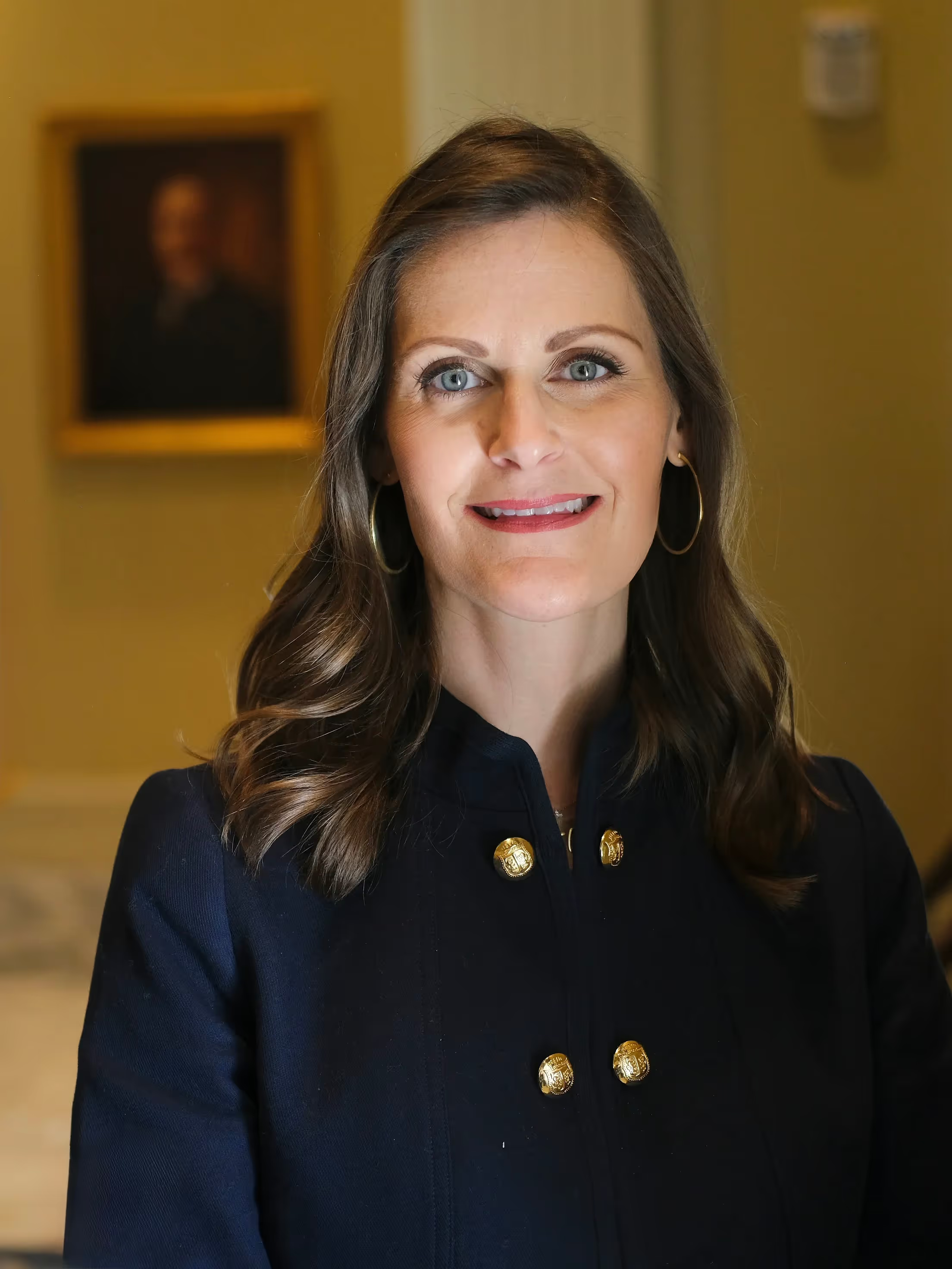
Nellie Tayloe Sanders
Former Oklahoma Secretary of Education
Nellie Tayloe Sanders brings a rare vantage point to the conversation on learner variability. She has experienced education from every angle as a dyslexic thinker, as a parent of dyslexic learners, and as the state official responsible for overseeing a state education system. She understands both the cost of unidentified strengths and the structural barriers that keep support reactive instead of foundational. Sanders served as Oklahoma’s Secretary of Education, where she led structural reforms to reset literacy, rebuild the educator pipeline, and modernize the state’s education data infrastructure for the first time in more than two decades. She mandated statewide Science of Reading certification to strengthen early literacy, launched registered teacher apprenticeship pathways to stabilize the educator workforce, and realigned academic standards to restore transparency around readiness. She also designed the blueprint and chaired the nation's first Human Potential for Future Industries Task Force, established by executive order to rethink how Oklahoma discovers student strengths, develops durable and transferable skills, and builds pathways that extend from classroom to career in a rapidly evolving economy. Earlier in her career, Sanders worked in New York City at Condé Nast Publications selling national print and digital media during the rise of Web 2.0 on national brands including WIRED, where she witnessed how quickly technology can reorganize industries. She later moved to Oklahoma and spent a decade at the Center of Family Love where she served as Senior Vice President of Philanthropy, raising more than $25 million dollars to expand workforce enterprises and secure lifetime care for adults with intellectual and developmental differences. While there, she also co-directed and concept-produced the organization’s internationally award-winning documentary, "People Like Us." The film examined what happens when systems fail to recognize capability in plain sight, a lesson that now feels urgent in the age of artificial intelligence. These experiences shaped her belief that as artificial intelligence scales personalization, the central question is whether education systems will redesign around human variability or reinforce the one-size-fits-all averages they were built to serve. Her work centers on a clear premise: access to opportunity begins with access to one’s own intelligence.


.svg)
